📞 +1-866-484-1409
Certified Hazard Remediation

Professional Soot Cleanup in Washington, DC

Soot is not just a stain. It is airborne particulate contamination containing carcinogenic compounds that spreads further with every DIY cleaning attempt. Our certified technicians in Washington use HEPA containment protocols and negative air pressure systems to remove soot safely, protecting your family's respiratory health.

Call +1-866-484-1409 Now View All Services
🧧

HEPA Containment Protocols

Industrial HEPA filtration and negative air pressure systems prevent airborne re-contamination during every removal job.

☣

Health-Safe Removal Certified

Our technicians are trained in proper PPE use and OSHA-compliant soot particulate removal procedures for synthetic material fires.

⏰

Same-Day Emergency Response

Soot contamination worsens with every passing hour. We dispatch certified crews the same day you call in Washington and surrounding areas.

🍃

No Airborne Re-contamination

Standard mops and vacuums aerosolize soot particles. Our closed-system HEPA protocol ensures particles are captured, not recirculated.

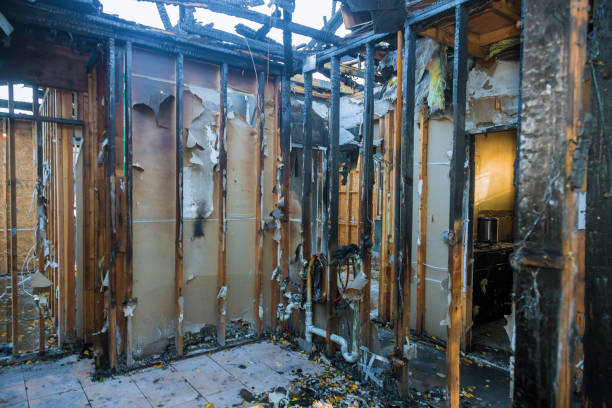
Certified soot removal technician in protective equipment

Soot Is a PM2.5 Health Hazard, Not Just a Staining Problem

When most homeowners see soot after a fire, their first instinct is to reach for a sponge or a household vacuum. That instinct, however well-meaning, is one of the most dangerous responses possible. Soot particles produced by modern residential fires measure predominantly at PM2.5 and smaller, meaning they are fine enough to penetrate deep into the respiratory system and lodge in lung tissue. A standard household vacuum does not filter at this level. What it actually does is aerosolize the particles, pulling them off surfaces and dispersing them through the air in your living space, where every breath delivers another dose of contamination.

The toxicological profile of soot depends heavily on what burned. Wood fires produce a relatively simpler particle profile. Modern homes, however, are filled with synthetic materials: polyurethane foam in upholstered furniture and mattresses, PVC electrical wiring, engineered flooring with formaldehyde-based adhesives, plastic fixtures, and synthetic carpet fibers. When these materials combust, the soot they produce contains polycyclic aromatic hydrocarbons (PAHs), volatile organic compounds (VOCs), and in some cases trace heavy metals. Many of these compounds are classified as known or probable human carcinogens by major health agencies. They do not simply sit on surfaces and wait to be wiped away. They off-gas continuously, contaminating indoor air at concentrations that can remain dangerously elevated for days after a fire event.

Wet wiping soot from a surface without proper containment does not clean it. It spreads lipophilic soot compounds laterally, embeds particles deeper into porous materials, and may chemically activate some residues, making them harder to remove and more likely to off-gas.

This is why professional Soot Cleanup in Washington, DC requires a negative air pressure containment setup before any surface work begins. By establishing an enclosed work zone where air is continuously drawn outward through industrial HEPA scrubbers and exhausted to the exterior, technicians create a controlled environment. Particles disturbed during cleaning are captured rather than recirculated. This approach is not optional for health-safe remediation. It is the foundational step that makes every subsequent cleaning action effective rather than counterproductive.

HEPA filtration standards require filters capable of capturing 99.97% of particles measuring 0.3 microns and larger. Given that soot from synthetic material fires frequently falls below 1 micron in particle diameter, industrial HEPA equipment rated beyond standard residential specifications is required for genuine PM2.5 removal. Our Soot Cleanup technicians deploy equipment calibrated for this particle range, verified against industry protocols before each deployment.

Post-cleanup air quality verification is the final step that separates professional remediation from cosmetic surface cleaning. After all visible soot has been removed and treated, air sampling confirms that particulate concentrations have returned to pre-fire baseline levels. This verification step provides documentation that the property is genuinely safe for re-occupancy and supports insurance claims requiring chain of custody cleaning records. In Washington and across Washington, DC, homeowners who attempt DIY soot cleanup frequently find that professional remediation is required anyway, weeks later, when respiratory symptoms and persistent odor make it clear that the initial effort spread contamination rather than removing it.

Complete Soot Cleanup Solutions in Washington, DC

From initial contamination assessment through post-cleanup air quality verification, every step follows certified health-safe protocols.

🔎

Soot Hazard Assessment & Air Testing

Before any physical work begins, certified technicians conduct a full contamination zone assessment. Air sampling establishes pre-remediation particulate baseline concentrations, and the extent of soot migration through HVAC systems and adjacent rooms is mapped to ensure no contaminated area is missed.

Learn More
🌀

Negative Pressure Containment Setup

Industrial air scrubbers and poly sheeting establish a negative pressure work zone that prevents soot particles from migrating to clean areas during removal. This containment step is non-negotiable for health-safe remediation and is completed before any surface cleaning begins.

Learn More
🧹

HEPA Vacuum & Surface Soot Removal

Using industrial HEPA vacuums rated for PM2.5 particle capture, technicians methodically remove dry soot deposits from all affected surfaces. Dry HEPA vacuuming precedes any wet treatment to prevent soot from being driven deeper into porous materials through moisture.

Learn More
⚗

Hard Surface Chemical Soot Treatment

Residual soot compounds bonded to hard surfaces require specially formulated alkaline cleaners that break the lipophilic bond between soot particles and the substrate. Our technicians apply and agitate these solutions under controlled conditions to lift embedded soot without abrading or staining delicate finishes.

Learn More
🏠

Post-Cleanup Air Quality Verification

Following completed remediation, air sampling confirms that particulate concentrations have returned to safe, pre-fire baseline levels. Written clearance documentation is provided, supporting both safe re-occupancy decisions and insurance claim submissions requiring evidence of chain of custody cleaning in Washington, DC.

Learn More

How Professional Soot Cleanup Works

A systematic, health-safe sequence designed to eliminate soot contamination completely, not just reduce it visibly.

🔍

Contamination Zone Assessment

Our certified inspector maps the full extent of soot contamination, including secondary migration through HVAC systems and adjacent spaces. Air sampling establishes the PM2.5 baseline so post-cleanup verification has an accurate reference point.

🌀

Containment & Air Scrubbing Setup

Before a single surface is touched, negative air pressure containment is established. Industrial HEPA air scrubbers are positioned and running, poly sheeting seals the zone, and the team suits up with appropriate PPE for carcinogenic soot compound handling.

🧹

Systematic HEPA Soot Removal

Working from ceiling to floor and from the fire origin outward, technicians HEPA vacuum dry soot, apply chemical treatments to bonded residues on hard surfaces, and document each treated area. Soft contents, ductwork, and porous materials are assessed individually for cleaning or documented for replacement.

✅

Air Quality Clearance Testing

Post-remediation air sampling confirms particulate levels are at or below pre-fire baselines. Written clearance documentation is issued, meeting the chain of custody cleaning standard required for insurance processing and confirming the property is safe for re-occupancy in Washington, Washington, DC.

Trusted by Homeowners Across Washington, DC

Real feedback from homeowners who trusted us to protect their families from soot contamination after a fire event.

★★★★★

After a kitchen fire, we tried cleaning the soot ourselves and it just made the smell worse and spread black residue everywhere. Fire Damage Repair CO came in, set up their containment system, and the difference after their cleanup was night and day. The air clarity test at the end gave us actual peace of mind.

Maria T.

Washington, DC

★★★★★

I had no idea soot from a furniture fire was a different health risk than wood fire soot. The technician explained the PM2.5 hazard clearly, showed me the pre-cleanup air test results, and walked me through the clearance documentation for my insurance company. Professional in every way.

David R.

Washington, DC

★★★★★

Same-day response was critical for us because we had young children we needed to get back home. The crew arrived within a few hours, had containment set up quickly, and completed the full HEPA cleanup and clearance test in one day. We were able to re-enter safely that evening.

Priya K.

Washington, DC

Soot cleanup process in Washington, Washington, DC

Soot Cleanup FAQ

Answers to the questions homeowners ask most when facing soot contamination in Washington.

  • Yes, and particularly so with modern residential fires. Soot from synthetic materials such as upholstery foam, plastics, and engineered materials contains polycyclic aromatic hydrocarbons and volatile organic compounds, many of which are classified as carcinogenic. PM2.5 particles, which soot from synthetic fires produces in abundance, are small enough to bypass the respiratory system's natural defenses and penetrate deep into lung tissue. Short-term exposure causes respiratory irritation, and prolonged exposure in an inadequately cleaned space poses a cumulative health risk that should not be dismissed as minor.
  • Standard household vacuums exhaust air that has not been filtered at the PM2.5 level, which means they pick up soot from surfaces and redistribute it as airborne particulate throughout the room. Wet cleaning soot before HEPA dry vacuuming drives particles into porous materials and spreads lipophilic soot compounds laterally across surfaces. Without negative air pressure containment, cleaning activity in a contaminated area increases the airborne particle load rather than reducing it. Professional Soot Cleanup in Washington uses the correct sequence: containment and air scrubbing first, HEPA dry removal second, chemical treatment third, and air clearance testing last.
  • The duration depends on the size of the affected area, the fire's origin material, and how far soot has migrated through the structure. A contained kitchen fire affecting one room may be remediable in a single day. A whole-floor synthetic material fire with HVAC system contamination may require two to three days of systematic work. The post-cleanup air quality verification step adds time but is essential for health-safe clearance. Your Fire Damage Repair CO technician will provide an estimated timeline during the initial contamination zone assessment before any work begins.
  • Persistent soot odor after a basic cleaning attempt is a reliable indicator that soot residue remains embedded in porous materials, HVAC system components, or within wall cavities. When professional HEPA Soot Cleanup removes the particulate and chemical residue fully, the primary source of odor is eliminated. In some cases, supplemental odor neutralization using thermal fogging or hydroxyl treatment is recommended for deeply embedded odor in soft contents. The air quality clearance test at the end of our process confirms particulate levels are below threshold, which correlates strongly with the elimination of health-hazard-level odor sources.
  • Time is a significant factor in soot treatability. In the first hours after a fire, dry soot on hard surfaces is more easily captured by HEPA vacuuming before it bonds chemically to the substrate. As soot ages, the lipophilic compounds in synthetic material soot penetrate porous surfaces and form bonds that become progressively harder to break without abrasive treatment that may damage finishes. On painted surfaces, acidic soot compounds can begin to etch within 48 to 72 hours. Prompt professional Soot Cleanup in Washington significantly increases the percentage of materials that can be cleaned versus those that require replacement, which has direct implications for your restoration budget and insurance claim.
  • Yes. Our chain of custody cleaning documentation includes the pre-remediation contamination assessment, air quality baseline measurements, a log of all surfaces treated and methods used, and the post-cleanup air clearance test results. This documentation package meets the requirements of most major insurers for Soot Cleanup claims in Washington, DC and is designed to support your adjuster's processing without gaps or ambiguities. We recommend contacting your insurer before work begins to confirm any carrier-specific documentation requirements.

Same-Day Soot Cleanup Available in Washington

Every hour of delay allows soot compounds to bond deeper into surfaces and increases the airborne contamination risk for your family. Contact Fire Damage Repair CO now for a same-day response.
Our Services in Washington, DC

Washington, D.C., formally the District of Columbia and commonly called Washington or D.C., is the capital city of the United States. The city is located on the east bank of the Potomac River, which forms its southwestern border with Virginia and borders Maryland to its north and east. The city was named for George Washington, a Founding Father, victorious commanding general of the Continental Army in the American Revolutionary War and the first president of the United States who is sometimes referred to as "Father of his country". The district is named for Columbia, the female personification of the nation.

Zip Codes in Washington, DC that we also serve: 20250 20010 20011 20012 20015 20520 20064 20418 20415 20388 20319 20020 20024 20510 20515 20591 20427 20422 20542 20540 20240 20245 20390 20005 20004 20003 20002 20001 20009 20008 20016 20317 20059 20057 20052 20017 20018 20565 20566 20560 20220 20551 20019 20230 20373 20260 20007 20006 20032 20036 20037 20204 20431 20045 20408 20535 20530 20013 20022 20026 20027 20029 20030 20033 20035 20038 20039 20040 20042 20043 20044 20047 20049 20050 20053 20055 20056 20058 20060 20061 20062 20063 20065 20066 20067 20068 20069 20070 20071 20073 20074 20075 20076 20077 20078 20080 20081 20082 20090 20091 20201 20202 20203 20206 20207 20208 20210 20211 20212 20213 20214 20215 20216 20217 20218 20219 20221 20222 20223 20224 20226 20227 20228 20229 20232 20233 20235 20237 20238 20239 20241 20242 20244 20251 20252 20254 20261 20262 20265 20266 20268 20270 20277 20289 20299 20301 20303 20306 20310 20314 20318 20330 20340 20350 20355 20370 20372 20374 20375 20376 20380 20389 20391 20392 20393 20394 20395 20398 20401 20402 20403 20404 20405 20406 20407 20410 20411 20412 20413 20414 20416 20417 20419 20420 20421 20423 20424 20425 20426 20428 20429 20433 20434 20435 20436 20437 20439 20440 20441 20442 20444 20447 20451 20453 20456 20460 20463 20468 20469 20470 20472 20500 20501 20502 20503 20504 20505 20506 20507 20508 20509 20511 20521 20522 20523 20524 20525 20526 20527 20528 20529 20531 20533 20534 20536 20537 20538 20539 20541 20543 20544 20546 20547 20548 20549 20552 20553 20554 20555 20557 20559 20570 20571 20572 20573 20575 20576 20577 20578 20579 20580 20581 20585 20586 20590 20593 20594 20597 20599 56901 56902 56904 56908 56915 56920 56933 56935 56944 56945 56950 56965 56967 56972 56998 56999

Cities Close To Washington, DC That We Also Serve


Soot Cleanup Express #1
★ 4.9 (120+ Reviews)
Dispatch Center, DC
Call +1-866-484-1409
Soot Cleanup Express #2
★ 4.9 (120+ Reviews)
Dispatch Center, DC
Call +1-866-484-1409
Soot Cleanup Express #3
★ 4.9 (120+ Reviews)
Dispatch Center, DC
Call +1-866-484-1409
Soot Cleanup Express #4
★ 4.9 (120+ Reviews)
Dispatch Center, DC
Call +1-866-484-1409
Soot Cleanup Express #5
★ 4.9 (120+ Reviews)
Dispatch Center, DC
Call +1-866-484-1409
Soot Cleanup Express #6
★ 4.9 (120+ Reviews)
Dispatch Center, DC
Call +1-866-484-1409
🟢 Techs On Duty in Washington, DC Call +1-866-484-1409