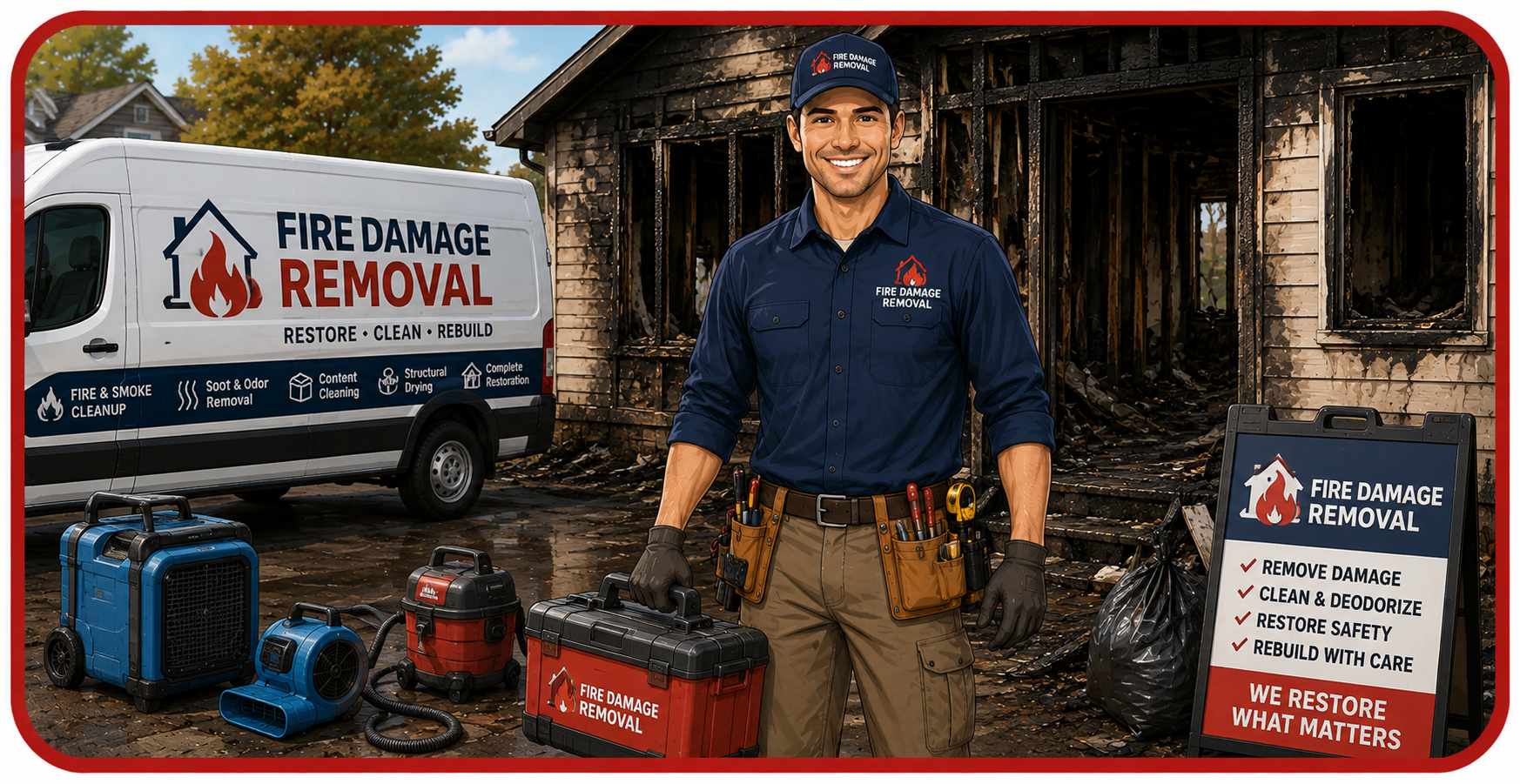
Soot is not just a stain. It is airborne particulate contamination containing carcinogenic compounds that spreads further with every DIY cleaning attempt. Our certified technicians in Fort George G Meade use HEPA containment protocols and negative air pressure systems to remove soot safely, protecting your family's respiratory health.
Call +1-866-484-1409 Now View All Services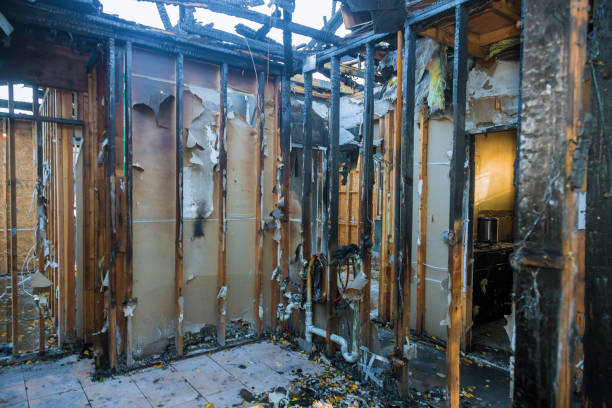
Why It Matters
When most homeowners see soot after a fire, their first instinct is to reach for a sponge or a household vacuum. That instinct, however well-meaning, is one of the most dangerous responses possible. Soot particles produced by modern residential fires measure predominantly at PM2.5 and smaller, meaning they are fine enough to penetrate deep into the respiratory system and lodge in lung tissue. A standard household vacuum does not filter at this level. What it actually does is aerosolize the particles, pulling them off surfaces and dispersing them through the air in your living space, where every breath delivers another dose of contamination.
The toxicological profile of soot depends heavily on what burned. Wood fires produce a relatively simpler particle profile. Modern homes, however, are filled with synthetic materials: polyurethane foam in upholstered furniture and mattresses, PVC electrical wiring, engineered flooring with formaldehyde-based adhesives, plastic fixtures, and synthetic carpet fibers. When these materials combust, the soot they produce contains polycyclic aromatic hydrocarbons (PAHs), volatile organic compounds (VOCs), and in some cases trace heavy metals. Many of these compounds are classified as known or probable human carcinogens by major health agencies. They do not simply sit on surfaces and wait to be wiped away. They off-gas continuously, contaminating indoor air at concentrations that can remain dangerously elevated for days after a fire event.
This is why professional Soot Cleanup in Fort George G Meade, MD requires a negative air pressure containment setup before any surface work begins. By establishing an enclosed work zone where air is continuously drawn outward through industrial HEPA scrubbers and exhausted to the exterior, technicians create a controlled environment. Particles disturbed during cleaning are captured rather than recirculated. This approach is not optional for health-safe remediation. It is the foundational step that makes every subsequent cleaning action effective rather than counterproductive.
HEPA filtration standards require filters capable of capturing 99.97% of particles measuring 0.3 microns and larger. Given that soot from synthetic material fires frequently falls below 1 micron in particle diameter, industrial HEPA equipment rated beyond standard residential specifications is required for genuine PM2.5 removal. Our Soot Cleanup technicians deploy equipment calibrated for this particle range, verified against industry protocols before each deployment.
Post-cleanup air quality verification is the final step that separates professional remediation from cosmetic surface cleaning. After all visible soot has been removed and treated, air sampling confirms that particulate concentrations have returned to pre-fire baseline levels. This verification step provides documentation that the property is genuinely safe for re-occupancy and supports insurance claims requiring chain of custody cleaning records. In Fort George G Meade and across Fort George G Meade, MD, homeowners who attempt DIY soot cleanup frequently find that professional remediation is required anyway, weeks later, when respiratory symptoms and persistent odor make it clear that the initial effort spread contamination rather than removing it.
What We Do
From initial contamination assessment through post-cleanup air quality verification, every step follows certified health-safe protocols.
Before any physical work begins, certified technicians conduct a full contamination zone assessment. Air sampling establishes pre-remediation particulate baseline concentrations, and the extent of soot migration through HVAC systems and adjacent rooms is mapped to ensure no contaminated area is missed.
Learn MoreIndustrial air scrubbers and poly sheeting establish a negative pressure work zone that prevents soot particles from migrating to clean areas during removal. This containment step is non-negotiable for health-safe remediation and is completed before any surface cleaning begins.
Learn MoreUsing industrial HEPA vacuums rated for PM2.5 particle capture, technicians methodically remove dry soot deposits from all affected surfaces. Dry HEPA vacuuming precedes any wet treatment to prevent soot from being driven deeper into porous materials through moisture.
Learn MoreResidual soot compounds bonded to hard surfaces require specially formulated alkaline cleaners that break the lipophilic bond between soot particles and the substrate. Our technicians apply and agitate these solutions under controlled conditions to lift embedded soot without abrading or staining delicate finishes.
Learn MoreFollowing completed remediation, air sampling confirms that particulate concentrations have returned to safe, pre-fire baseline levels. Written clearance documentation is provided, supporting both safe re-occupancy decisions and insurance claim submissions requiring evidence of chain of custody cleaning in Fort George G Meade, MD.
Learn MoreOur Process
A systematic, health-safe sequence designed to eliminate soot contamination completely, not just reduce it visibly.
Our certified inspector maps the full extent of soot contamination, including secondary migration through HVAC systems and adjacent spaces. Air sampling establishes the PM2.5 baseline so post-cleanup verification has an accurate reference point.
Before a single surface is touched, negative air pressure containment is established. Industrial HEPA air scrubbers are positioned and running, poly sheeting seals the zone, and the team suits up with appropriate PPE for carcinogenic soot compound handling.
Working from ceiling to floor and from the fire origin outward, technicians HEPA vacuum dry soot, apply chemical treatments to bonded residues on hard surfaces, and document each treated area. Soft contents, ductwork, and porous materials are assessed individually for cleaning or documented for replacement.
Post-remediation air sampling confirms particulate levels are at or below pre-fire baselines. Written clearance documentation is issued, meeting the chain of custody cleaning standard required for insurance processing and confirming the property is safe for re-occupancy in Fort George G Meade, Fort George G Meade, MD.
What Clients Say
Real feedback from homeowners who trusted us to protect their families from soot contamination after a fire event.
After a kitchen fire, we tried cleaning the soot ourselves and it just made the smell worse and spread black residue everywhere. Fire Damage Repair CO came in, set up their containment system, and the difference after their cleanup was night and day. The air clarity test at the end gave us actual peace of mind.
Fort George G Meade, MD
I had no idea soot from a furniture fire was a different health risk than wood fire soot. The technician explained the PM2.5 hazard clearly, showed me the pre-cleanup air test results, and walked me through the clearance documentation for my insurance company. Professional in every way.
Fort George G Meade, MD
Same-day response was critical for us because we had young children we needed to get back home. The crew arrived within a few hours, had containment set up quickly, and completed the full HEPA cleanup and clearance test in one day. We were able to re-enter safely that evening.
Fort George G Meade, MD
Common Questions
Answers to the questions homeowners ask most when facing soot contamination in Fort George G Meade.
Get Protected Today
Every hour of delay allows soot compounds to bond deeper into surfaces and increases the airborne contamination risk for your family. Contact Fire Damage Repair CO now for a same-day response.