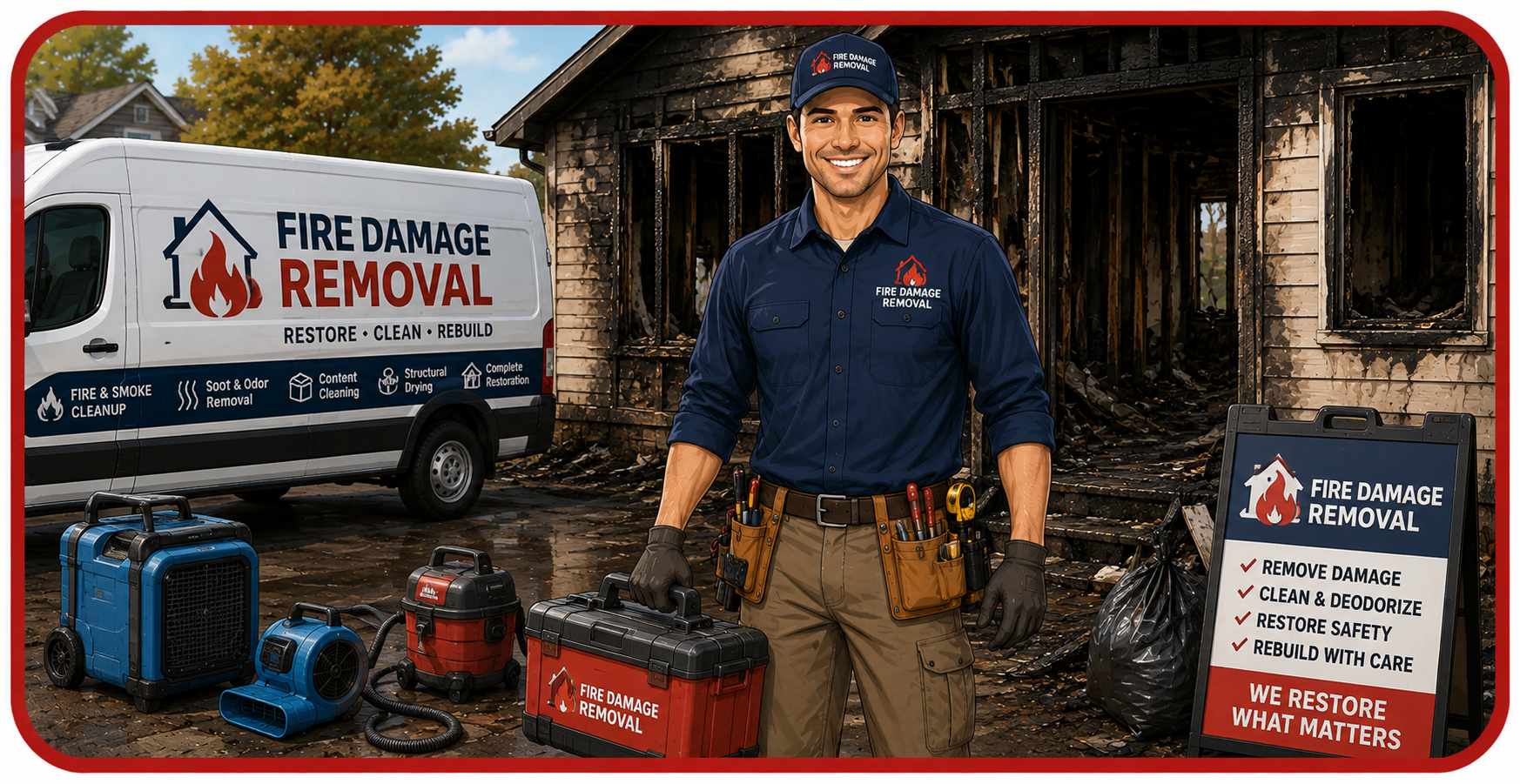
Our certified restoration professionals bring fire-damaged properties back to pre-loss condition, managing every phase from emergency site evaluation through final structural clearance. Serving Neshanic Station, Neshanic Station, NJ and surrounding communities.
Our technicians hold current Institute of Inspection, Cleaning and Restoration Certification credentials, following industry-standard protocols on every job.
We document scope of loss thoroughly and work alongside your adjuster to ensure every legitimate claim item is captured and properly categorized.
Every engagement begins with a comprehensive structural integrity review, identifying compromised load-bearing elements before any restoration work begins.
Our commitment is your property returned to pre-loss condition. We stand behind our reconstruction work with written quality guarantees.
When a fire damages a property, many homeowners assume that the work ends once the flames are out and the visible debris is cleared. In reality, this is only the beginning of a complex, carefully sequenced restoration process. True fire damage restoration is not a single service but a multi-phase discipline that requires technical expertise, precise documentation, and an understanding of how fire, heat, and combustion byproducts interact with different building materials and structural systems. The goal of the entire process is one specific outcome: returning the property to pre-loss condition, meaning the structure and its contents perform exactly as they did before the fire event occurred.
The critical distinction homeowners need to understand is the difference between fire damage mitigation and fire damage restoration. Mitigation refers to the emergency response phase: boarding up windows and openings, tarping compromised roof sections, extracting water from firefighting efforts, and stabilizing the structure to prevent further deterioration. These actions stop the damage from compounding. Restoration, by contrast, is the full rebuilding and recovery phase that follows. It addresses the underlying damage, the structural repairs, and the reconstruction of affected materials to the property's original state. Without proper restoration, a property that received only mitigation services may appear stabilized on the surface while harboring ongoing structural compromises, embedded soot, or weakened load-bearing elements.
Structural assessment is the foundation on which every restoration decision is built. After a fire, visible charring and surface damage often underrepresent the actual extent of the problem. Heat transfer can weaken steel reinforcement inside concrete, cause engineered lumber to delaminate, and compromise the adhesive bonds in structural panels even when the surface appears intact. Our assessment teams use a combination of visual inspection, moisture mapping, and material testing to develop an accurate scope of loss documentation. This document categorizes every affected area by damage category, material type, and restoration versus replacement designation. Scope of loss documentation is not just an internal planning tool; it is the basis on which insurance adjusters validate the claim, which makes its accuracy critical to the homeowner's recovery.
Controlled demolition is one of the most misunderstood phases of the restoration process. Many homeowners are alarmed when they see demolition crews removing materials, but these decisions are based on specific technical thresholds, not guesswork. Materials that have absorbed combustion byproducts beyond cleanable saturation levels, structural members whose load capacity has been reduced beyond acceptable safety margins, and framing elements that would inhibit proper insulation and vapor management if retained are all designated for controlled removal. The word "controlled" is important here: demolition sequences are planned to preserve stable adjacent structures, protect existing utility runs where feasible, and avoid creating secondary collapse risks during the work.
Material salvage and content staging occur in parallel with demolition sequencing. Not every item exposed to fire or smoke is a total loss. Trained content specialists evaluate personal property, cabinetry, flooring materials, and structural components against a salvage matrix that accounts for smoke penetration depth, heat exposure level, and restorability. Items with restoration potential are staged and sent through appropriate cleaning and deodorization processes, which is both cost-effective and important for preserving irreplaceable personal items that have sentimental value beyond their replacement cost.
Precision reconstruction follows the approved scope and uses material specifications that match the original structure in dimension, performance rating, and finish. Reconstruction is sequenced to parallel the original construction order: structural framing first, followed by mechanical and electrical rough-in, then insulation and vapor barriers, drywall, finish carpentry, flooring, and final fixture installation. Each phase receives documented inspection before the next begins, creating a traceable record that supports both quality assurance and insurance compliance. The process concludes with final inspection and clearance, confirming that the restored property meets applicable building codes and the pre-loss condition standard the project was designed to achieve.
Comprehensive written and photographic documentation of all fire, heat, smoke, and water damage. Our scope reports meet insurance adjuster standards and provide a complete baseline for the restoration plan, categorizing materials by damage level, restorability, and replacement requirements.
Technical evaluation of all load-bearing elements, engineered lumber, roof decking, and foundation components affected by fire or firefighting water. We identify compromised structural members before work begins and develop a safe demolition and rebuilding sequence around confirmed stable zones.
Planned, sequenced removal of unsalvageable materials using protocols designed to protect stable adjacent structures. Debris is properly categorized for disposal, including materials that require special handling due to potential hazardous substance exposure during combustion.
Systematic evaluation and staging of personal property and structural materials with restoration potential. Contents are inventoried, professionally cleaned, and stored securely during the rebuild phase. Salvage decisions are documented for insurance purposes and coordinated with the overall project scope.
Phase-sequenced rebuilding using matched materials, proper installation methods, and documented inspections at each stage. From structural framing through finish work, every step is completed to code and inspected against the pre-loss condition standard established in the original scope document.
Comprehensive end-to-end walkthrough confirming that all restored areas meet building code requirements, the documented pre-loss condition standard, and our written quality guarantee. We provide a full project completion report suitable for insurance file closure and future property records.
Rapid response to secure and assess the property. We board openings, establish safety perimeters, and conduct the initial walk-through to identify immediate hazards and stabilization needs.
Detailed written, photographic, and measurement documentation of all affected areas, materials, and contents. This document drives the insurance claim and serves as the master blueprint for the restoration plan.
Systematic execution moving from controlled demolition through salvage, structural repair, mechanical rough-in, and complete finish reconstruction. Every phase is documented and inspected before the next begins.
End-to-end inspection confirming pre-loss condition standards, code compliance, and written guarantee activation. We provide the homeowner with a full project completion report for insurance and property records.
After the kitchen fire, I had no idea how much was actually involved in getting our home back. The team walked us through every phase, kept us informed about what was being removed and why, and worked directly with our insurance adjuster. The scope documentation they prepared was incredibly detailed.
The structural assessment phase was something I had not anticipated needing, but the team found heat damage to the roof framing that was not visible from the outside. That discovery changed the whole scope of the repair. I am grateful they did not skip that step because the problem would have shown up later.
From the controlled demolition through the final walkthrough, the project was handled professionally. They saved several pieces of our furniture that I thought were total losses, and the rebuilt sections of our home look identical to the original. Their documentation made our insurance settlement process straightforward.
Our certified specialists are ready to assess your property, document the full scope of loss, and build a restoration plan that returns your home to pre-loss condition. Call us now to speak with a restoration coordinator.
Call +1-866-484-1409 Now