Why Board-Up Is a Critical Secondary Loss Prevention Step
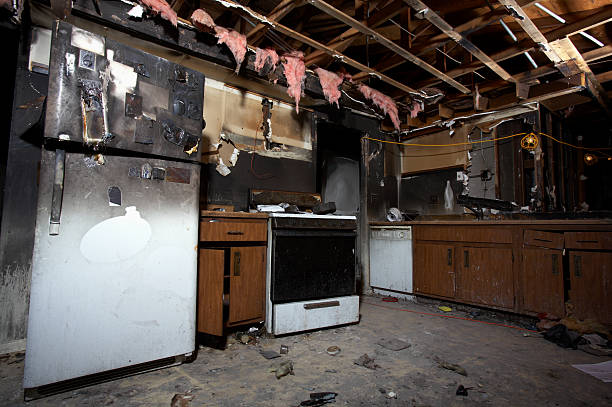
After a fire is extinguished, most property owners believe the primary damage is done. The reality is that secondary losses, those caused by weather intrusion, theft, vandalism, and unauthorized entry into an exposed structure, frequently match or exceed the fire damage itself. An unboarded property is not a secured property. It is an open invitation to an escalating chain of losses that can dramatically complicate your insurance claim and extend your recovery timeline by months.
Consider what happens to an exposed fire-damaged structure within 24 hours of a rain event. Water enters through burned roof decking, broken windows, and doorways left open by fire crews. That water saturates framing members that the fire may have already compromised. It floods subfloor systems, soaks insulation into useless waterlogged mats, and begins the humidity cycle that produces mold growth within 48 to 72 hours. A structure that was initially a fire loss claim now carries a water damage component and a mold remediation component, all because the weather-tight structural envelope was not re-established within the first critical hours.
Unboarded windows and doors present a different but equally costly category of risk. A fire-damaged property in any neighborhood context is visible to opportunists within hours of the incident. Fire crews and the activity of emergency response make the situation visible and publicize the address. Copper wiring, plumbing fixtures, appliances, and personal valuables that survived the fire entirely intact are entirely vulnerable once the property sits open overnight. Theft from a fire-damaged structure is common, and the stolen content items are losses that your homeowners or commercial policy covers only if you can demonstrate that reasonable steps were taken to secure the property. An unboarded property often fails that standard.
Most standard property insurance policies include a "reasonable steps" or "protective measures" clause that requires the policyholder to act to prevent additional damage after a covered loss. What constitutes reasonable steps is defined partly by industry convention and partly by what a claims adjuster concludes after inspecting the property. Boarding up windows, doors, and breached roof sections is universally understood within the insurance industry as the baseline standard for protecting a fire-damaged property. When a property owner does not board up and subsequent weather damage or theft occurs, the insurer has a defensible basis to deny those secondary claims as preventable. The cost of that denial typically dwarfs the cost of emergency board-up services by a factor of ten or more.
Roof tarping operates on the same principle but addresses the most urgent point of weather intrusion. Fire frequently damages or destroys roof decking, shingles, and structural framing. Even a small breach in the roof envelope allows water to enter throughout the structure in a heavy rain event. Professional roof tarping involves securing polyethylene or reinforced tarps from ridge to eave with batten strips and mechanical fasteners, creating a temporary weather-tight covering that protects the structure until permanent roof repair is possible. A tarp installed without proper fastening, or cut too short to cover the full affected area, provides inadequate protection. Our crews are trained in the specific tarping methodology that meets insurance documentation standards.
For properties in commercial corridors, multi-family complexes, or densely populated urban areas, site access control is an additional priority. Installing temporary security fencing around the perimeter of a fire-damaged property reduces unauthorized entry, protects against liability claims from trespassers, and creates a defined zone within which your insurance documentation and restoration team can work safely. The combination of structural opening sealing and perimeter security fencing constitutes a complete property security perimeter, and it is the standard we establish on every job we take in Waverly, OH.